Compliance Requirements
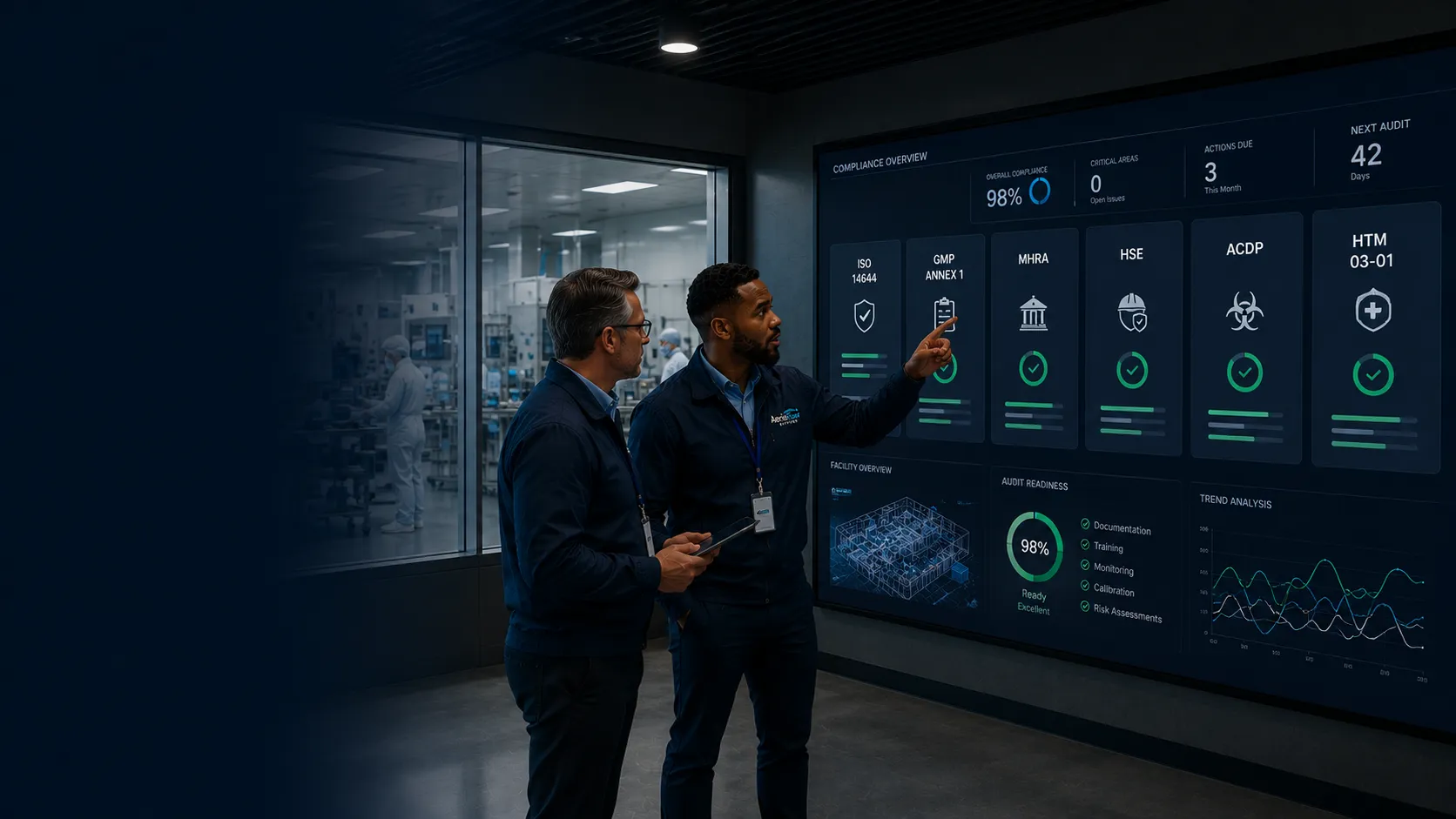
- IS14644
- Annex 1
- MHRA
- HSE
- ACDP
- HTM03-01
Key Standards & Guidelines
Explore the core requirements, key tests, and recommended testing intervals for each standard. Click any standard to view more details.
Core Requirements
- •Cleanrooms are classified by airborne particle concentration
- •Testing is performed in as-built, at-rest, and operational states
- •A monitoring plan should be developed based on risk and process
- •Validation and monitoring are separate but complementary activities
- •Periodic requalification is required to demonstrate continued compliance
Key Tests
- •Airborne particle count
- •Airflow volume / velocity
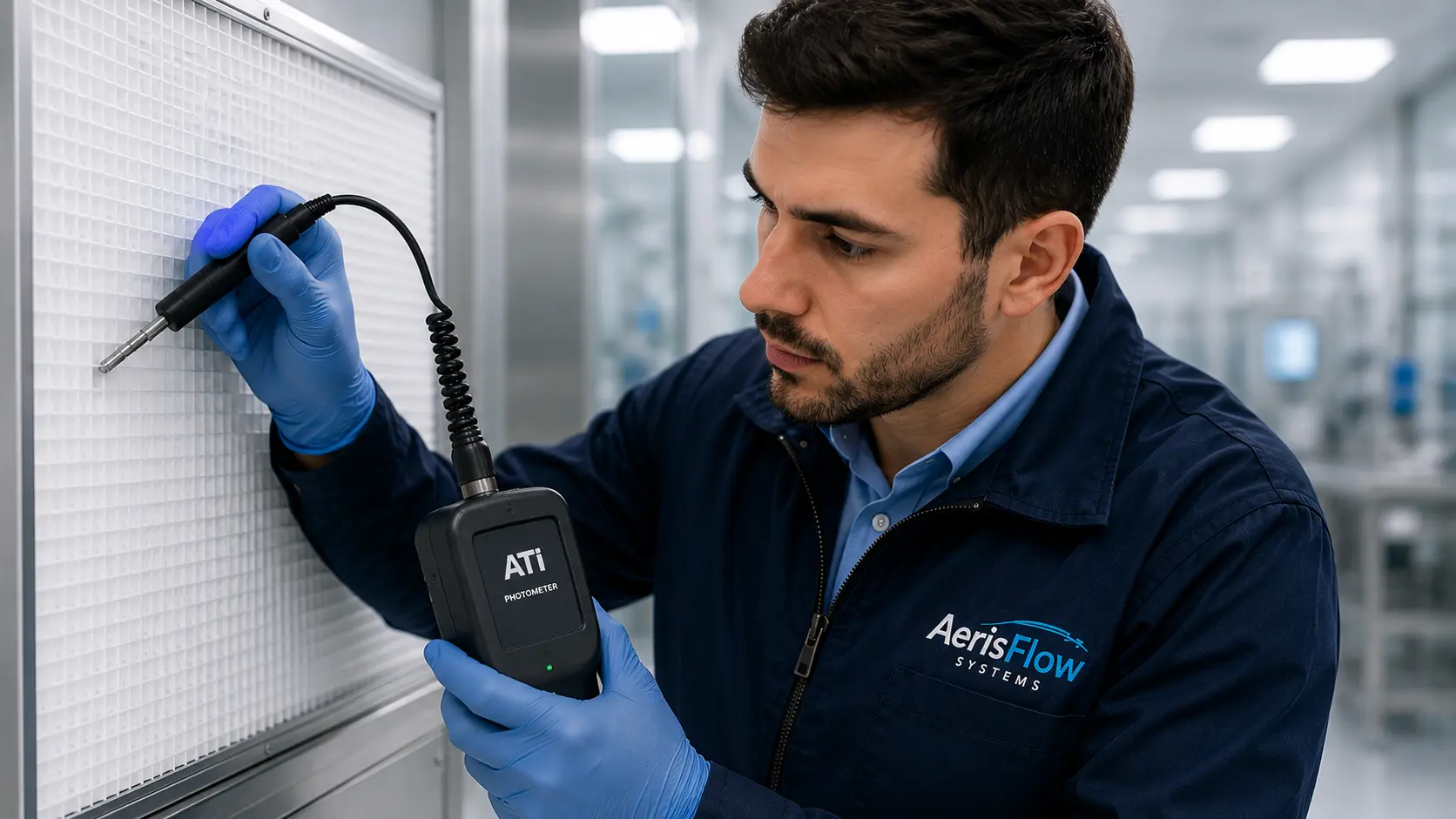
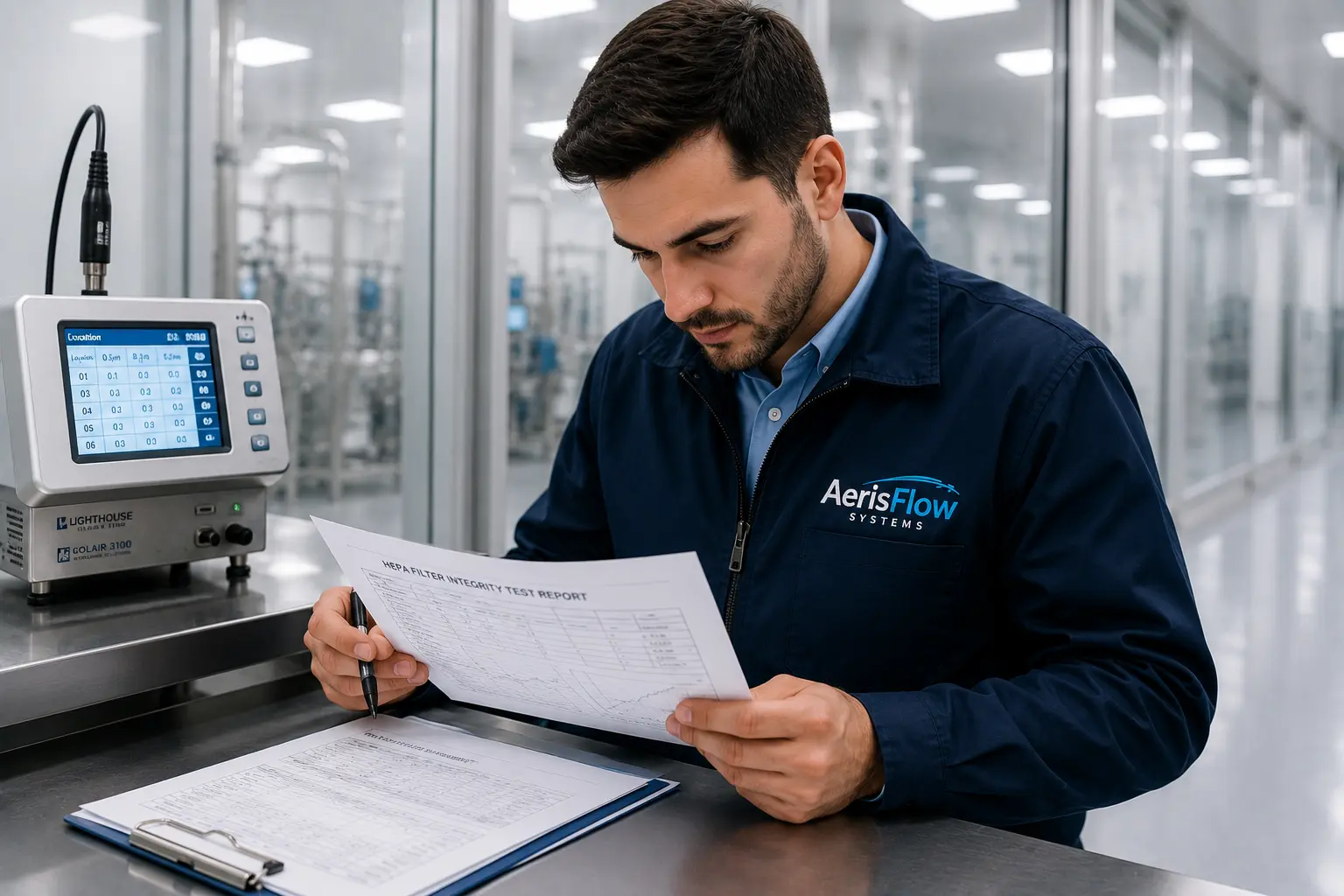
- •HEPA / ULPA filter integrity
- •Air pressure differential
- •Airflow direction and visualisation
- •Recovery testing
- •Temperature and relative humidity (where required)
Typical Industry Practice (Periodic Performance Testing)
- •Particle count ≤ ISO Class 5: 6 months
- •Particle count > ISO Class 5: 12 months
- •Filter integrity: 6-12 months
- •Airflow measurement: 6-12 months
- •Air pressure: Continuous / routine
- •Airflow visualisation: Periodic / after change
- •Recovery testing: Periodic / after change
Why this is recommended
Core Requirements
- •A documented Contamination Control Strategy (CCS) is required
- •Cleanrooms must be qualified and monitored in relevant states
- •Monitoring must include at-rest and operational conditions
- •Requalification must include at-rest and operational conditions
- •Systems must demonstrate ongoing control
- •Monitoring must be risk-based and justified
Key Tests
- •Continuous particle monitoring (Grade A)
- •Pressure differential monitoring
- •Airflow visualisation
- •Recovery testing
- •Environmental monitoring
Typical Industry Practice
- •Continuous monitoring in critical zones
- •Routine monitoring elsewhere (risk-based)
- •Requalification typically aligned with ISO (6–12 months)
Why this is recommended
Core Requirements
- •Engineering Control systems must capture and remove contaminants
- •Systems must be maintained in working order
- •Testing is a legal requirement
- •Records must demonstrate compliance
Mandatory Interval
TExT testing: ≤ 14 months (Legal requirement)
Industry Typical Interval
- •TExT testing: 6 -12 months (Best Practice)
Why this is required
Core Requirements
- •Effective containment must be demonstrated
- •Airflow performance must be verified
- •HEPA filter integrity must be maintained
Essential Checks
- •Inspection of cabinet installation and surrounding areas
- •Verification of prefilters, seals and sash operation
- •Inspection of electrical systems and earthing connections
- •Alarm calibration and setpoint verification checks
Key Tests
- •Inflow / downflow velocity
- •HEPA integrity
- •Containment performance (KI Discus)
Periodic Testing Typical Industry Practice
- •6 -12 months under Biological use
- •≤14 months under COSHH
Why this is recommended
Core Requirements
- •Hazard groups define containment level
- •Airflow and pressure must prevent escape
- •Systems must be validated
- •Risk-based testing
- •Apply COSHH / ISO where relevant
Key Tests
- •Room Sealability testing
- •Air leakage path identification
- •Pressure containment verification
- •Ventilation system performance testing
- •Fumigation System validation
Containment Strategy Typical Testing Interval
- •12 monthly testing
Why this is required
Core Requirements
- •Systems must be validated and maintained
- •Airflow and pressure must be controlled
- •Annual system verification
- •Additional testing after changes applied
Key Tests
- •AHU inspection and air volumes
- •Room fabric inspection
- •Determine air change rates
- •Verify pressure cascaded
- •Environmental monitoring
Clinical Safety
- •Verification ensures that theatre and ward ventilation protects patients from airborne infections.
- •Typical Testing Interval: 12 monthly testing
Why this is recommended
Core Requirements
- •Testing to HSG 258 requirements
- •Must contain hazardous fumes
- •Must be tested periodically
Mandatory Interval
Fume cupboards: ≤ 14 months (COSHH requirement)
User Protection
- •Regular face velocity and containment testing ensures hazardous substances are effectively exhausted.
- •Typical Testing Interval: 6 -12 months (Best Practice)
Why this is required
Standards vs Recommended Practice
A quick comparison of what each standard requires and typical industry practice.
| Standard / Guideline | What The Standard Requires | Typical Practice | Why This Is Done |
|---|---|---|---|
| ISO 14644 | Classification & testing | 6–12 month requalification | Maintain compliance |
| EU GMP Annex 1 | Contamination Control Strategy & monitoring | Continuous + Risk-based | Ensure control |
| COSHH / HSG 258 | LEV testing | Annual testing | Ensures compliance |
| BS EN 12469 | Biological safety cabinet performance | 6–12 month certification | Ensure containment |
| ACDP | Biological containment requirements | Annually + Risk-based | Prevents exposure |
| HTM 03-01 | Healthcare ventilation | Annual verification | Patient safety |
| BS EN 14175 | Fume cupboard performance & containment | Annual Testing | User protection |
Other International Standards
Key international standards and guidance commonly referenced across pharmaceutical, healthcare, laboratory and controlled environment facilities.
| Standard / Guideline | What The Standard Requires | Typical Practice | Why This Is Done |
|---|---|---|---|
| FDA cGMP (21 CFR 210/211) | Pharmaceutical quality systems & manufacturing controls | Ongoing compliance & inspection readiness | Ensure product quality |
| USP <797> | Sterile compounding environments | Routine environmental monitoring | Protect sterile preparations |
| USP <800> | Hazardous drug containment | Negative pressure & containment controls | Protect personnel & environment |
| NSF/ANSI 49 | Biological safety cabinet performance & certification | Annual certification | Ensure containment & operator protection |
| IEST Recommended Practices | HEPA filter testing & cleanroom best practice | Applied during qualification & requalification | Verify controlled environment performance |
| NFPA 45 | Fire protection for laboratories using chemicals | Risk-based facility controls | Reduce fire and explosion risk |
| NFPA 99 | Healthcare facility systems & risk management | Periodic verification & maintenance | Protect patients and staff |
Note: International standards may not be directly applicable to all UK facilities but are frequently referenced by multinational organisations, pharmaceutical manufacturers, research institutions and healthcare providers operating across multiple regulatory jurisdictions.
Speak to a Technical Specialist
Get expert support for your cleanroom, laboratory or critical environment. Our team is ready to help you achieve, maintain and demonstrate full compliance.
Request Consultation